
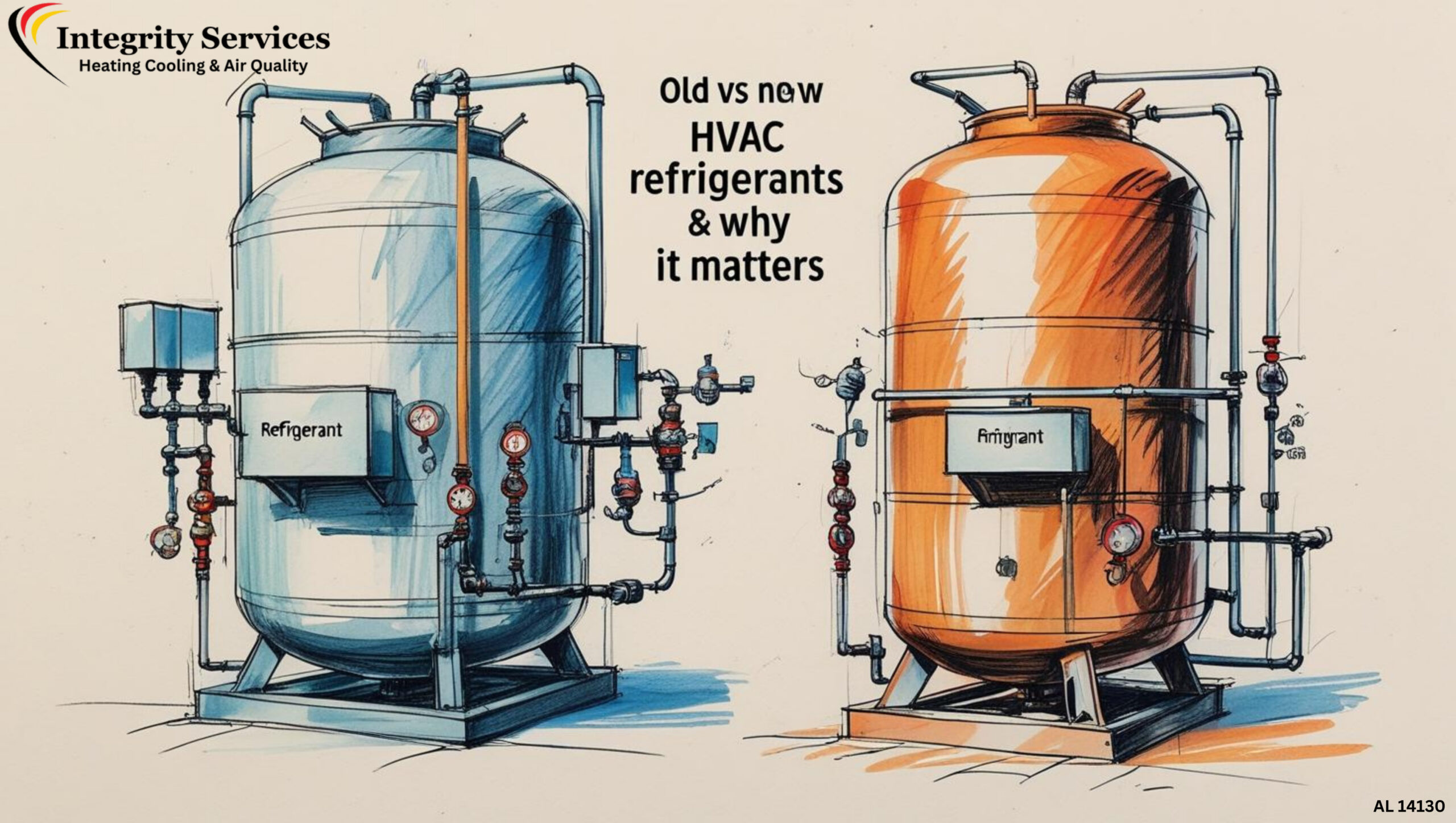
Why New HVAC Refrigerants Can’t Be Used in Old Units (And Why That Matters)
If you’ve been hearing about “new refrigerants” and your HVAC tech starts tossing around acronyms like R-410A, R-32, or R-454B, don’t worry—this isn’t a pop quiz. But you are about to get a little HVAC schooling (the fun kind, we promise).
📘 So, What’s the Deal with Refrigerants?
Refrigerants are the lifeblood of your HVAC system. They’re the magic chemicals that absorb heat from inside your home and release it outside—basically, how your AC keeps things nice and chilly.
But here’s the thing: not all refrigerants are created equal, and the rules about what can be used are changing fast. That’s because older refrigerants like R-22 and even the widely-used R-410A have been found to contribute to environmental problems like ozone depletion and global warming.
Enter: New refrigerants, like R-32 and R-454B, which are cleaner, greener, and federally approved to replace the old stuff.
⚠️ Why New Refrigerants Can’t Be Used in Old Units
You might be thinking: “Why not just pour the new stuff into my old system and call it a day?”
Ah, if only it were that simple.
Here’s why that won’t work (and could be downright dangerous):
🔧 1. Completely Different Chemistry
New refrigerants have different pressures, boiling points, and chemical properties than older ones. Mixing them with old systems is like trying to run diesel fuel in a gas engine—it just doesn’t end well.
🛠️ 2. Redesigned Components
Manufacturers had to redesign compressors, coils, expansion valves, and other internal parts to handle the newer refrigerants. These parts are made to work specifically with the physical and chemical traits of the new refrigerants. Trying to retrofit an old system is not only impractical—it’s usually impossible.
💥 3. It’s a Safety Hazard
Some newer refrigerants (like R-454B) are mildly flammable. Don’t panic—it’s totally safe in the right equipment. But your old system was never built with these safety protocols in mind. Retrofitting it without those protections is a big no-no.
🧠 Why Manufacturers Had to Redesign HVAC Systems
This wasn’t just an HVAC industry glow-up. The EPA and international environmental agencies rolled out strict regulations requiring refrigerants with lower Global Warming Potential (GWP). So manufacturers had two choices:
- Ignore the rules and get slapped with fines and bans.
- Roll up their sleeves and design entirely new systems from the ground up.
Spoiler alert: they chose door #2.
The result? More efficient, environmentally friendly units that perform just as well—if not better—than their older counterparts.
💡 What This Means for You
If you’re still rocking an older HVAC unit, here’s what you should know:
- Eventually, repairs will become more expensive. Older refrigerants like R-410A are being phased out, and their prices are rising.
- You can’t just “top off” with new refrigerants. Your unit has to be compatible.
- Upgrading to a new system means lower energy bills, fewer repairs, and peace of mind knowing your HVAC setup is future-proof.
📞 Ready to Upgrade?
We’re here to help! At Integrity Services, we offer free online quotes and can walk you through the best options for your home.
👉 Get your free estimate here:
https://www.integrityacservice.com/shop/#/journey/name_and_phone
Or give us a call at 256-240-0465 to schedule a consultation.
🛠️ Final Thought
When it comes to HVAC refrigerants, the future is clear: newer is better—for the planet, your comfort, and your wallet. Just make sure your equipment is ready for it.
Let’s keep your cool—responsibly. 😎
– The Integrity Services Team